DIRECT MARKETING & ILLUSTRATION PROJECT
USN Stickers
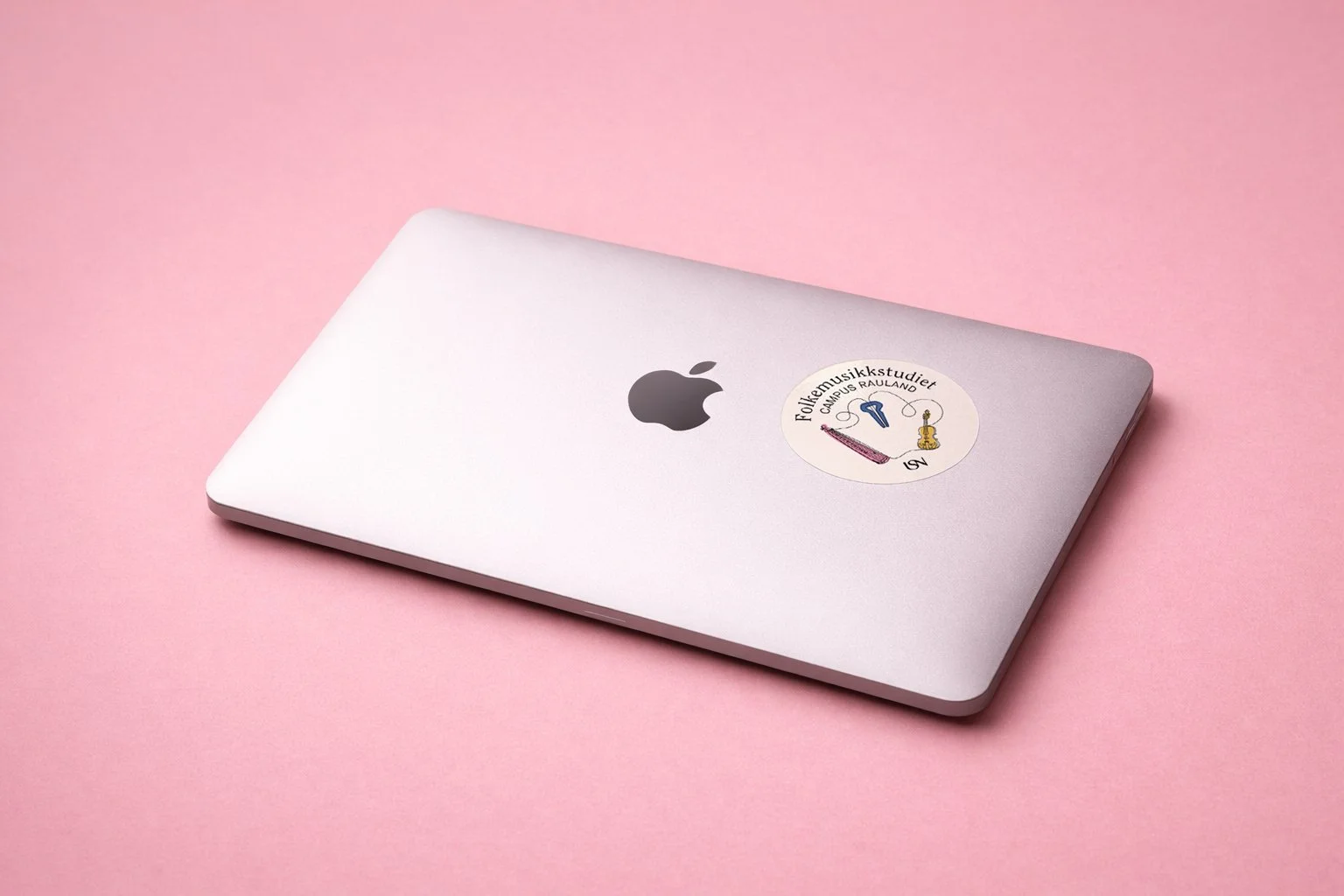
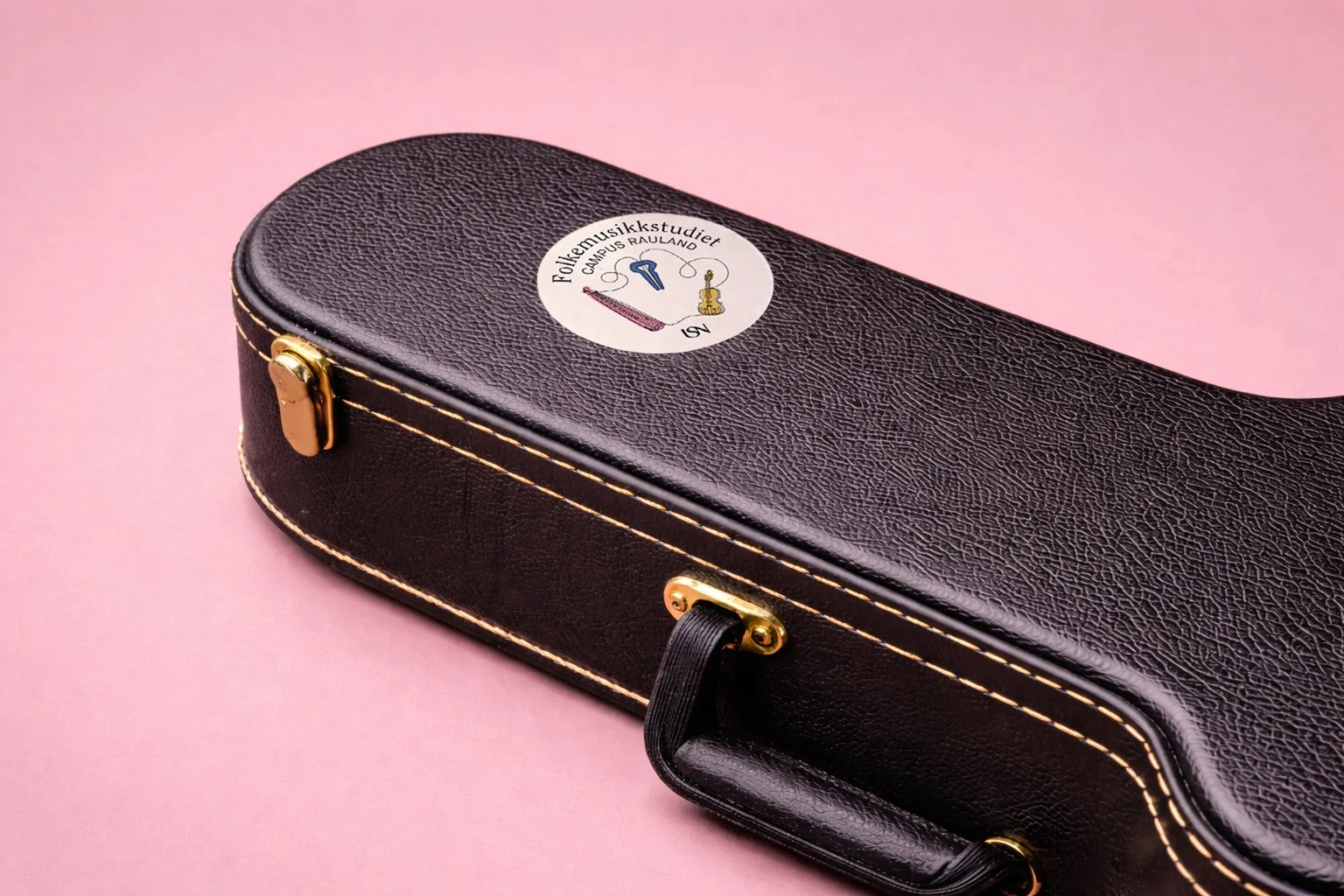
The Department of Folk Music, Folk Dance and Traditional Art at the University of South-Eastern Norway wants to develop stickers for three of its bachelor's programs. The stickers will function as a visual profiling element and will be used in marketing, at events and in student-oriented contexts.
The assignment includes the design and completion of stickers for the following studies: Bachelor of Folk Music, Bachelor of Folk Dance and Bachelor of Traditional Art. Each study will have its own sticker with a clear and independent identity, while at the same time the expression will be perceived as holistic and clearly rooted in the same academic environment.
Solution
The client wanted to avoid traditional folk art clichés such as bunad, rose painting and the eight-petal rose, and instead find a more modern and professionally rooted expression.
For the bachelor's program in folk dance, there was a desire for an illustration that conveyed kinetic mobility and bodies in motion. This was solved through a continuous line illustration, which gives a dynamic and lively expression. For the studies in folk music and traditional art, the desire was to highlight central instruments and tools that represent the various disciplines, and that clearly communicate both craftsmanship, tradition and practice.
Client
University of South-Eastern Norway, Rauland
Year
2025
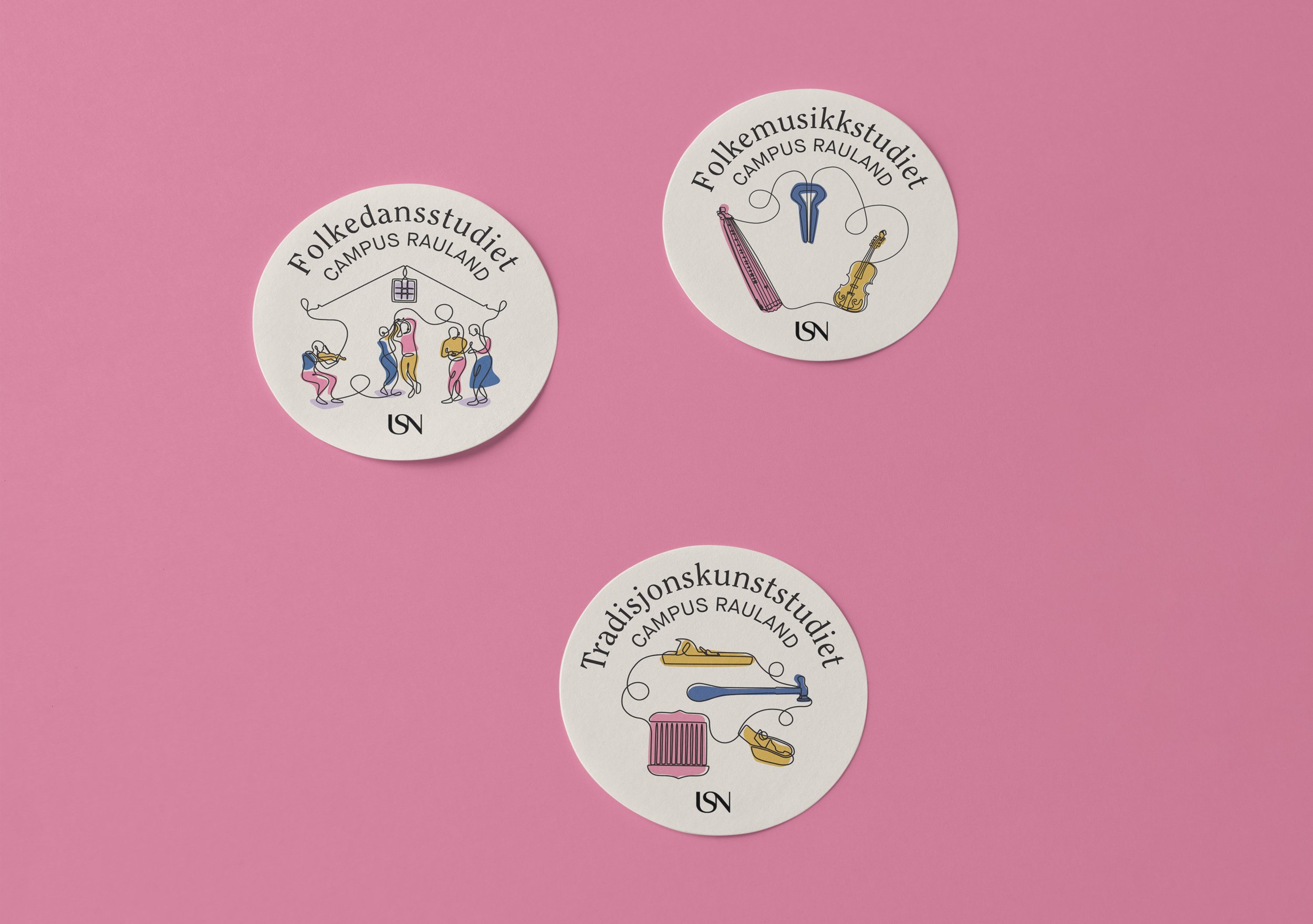
The colour palette was selected to create a more contemporary and playful aesthetic, while still complementing the established USN brand colours. The typography follows the design manual, using Clearface and Maison Neue. The line thickness in the folk music illustration is slightly thiner, as the motifs are more complex than in the other two illustrations.
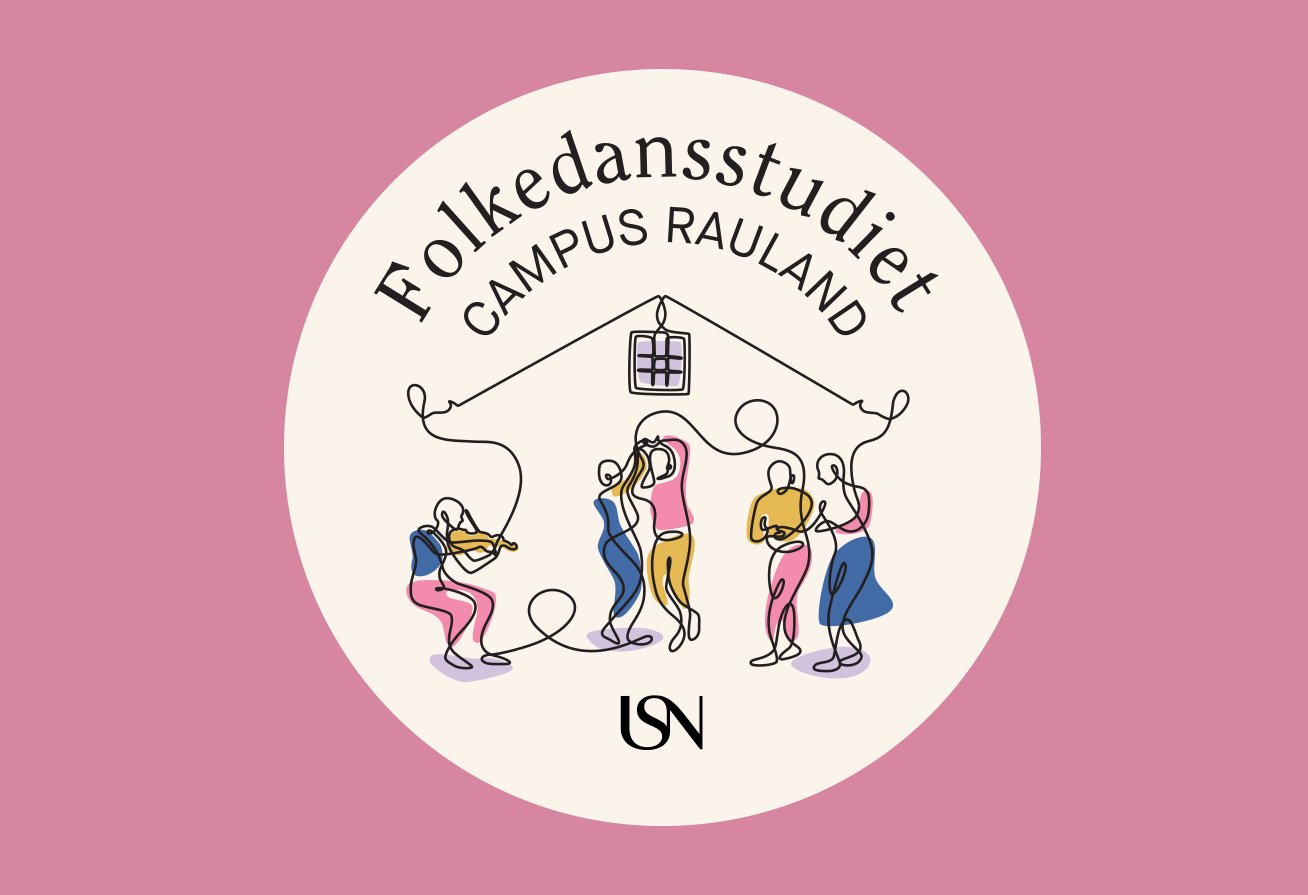
The illustration for the bachelor of folk-dance features couples dancing in traditional pair-dances like Springar and Gangar, inside of a typical community hall (grendehus) where people gathered during festive occasions, at weddings, and other celebrations. The roof design with the carved accents and the window is inspired by the community hall in Rauland.
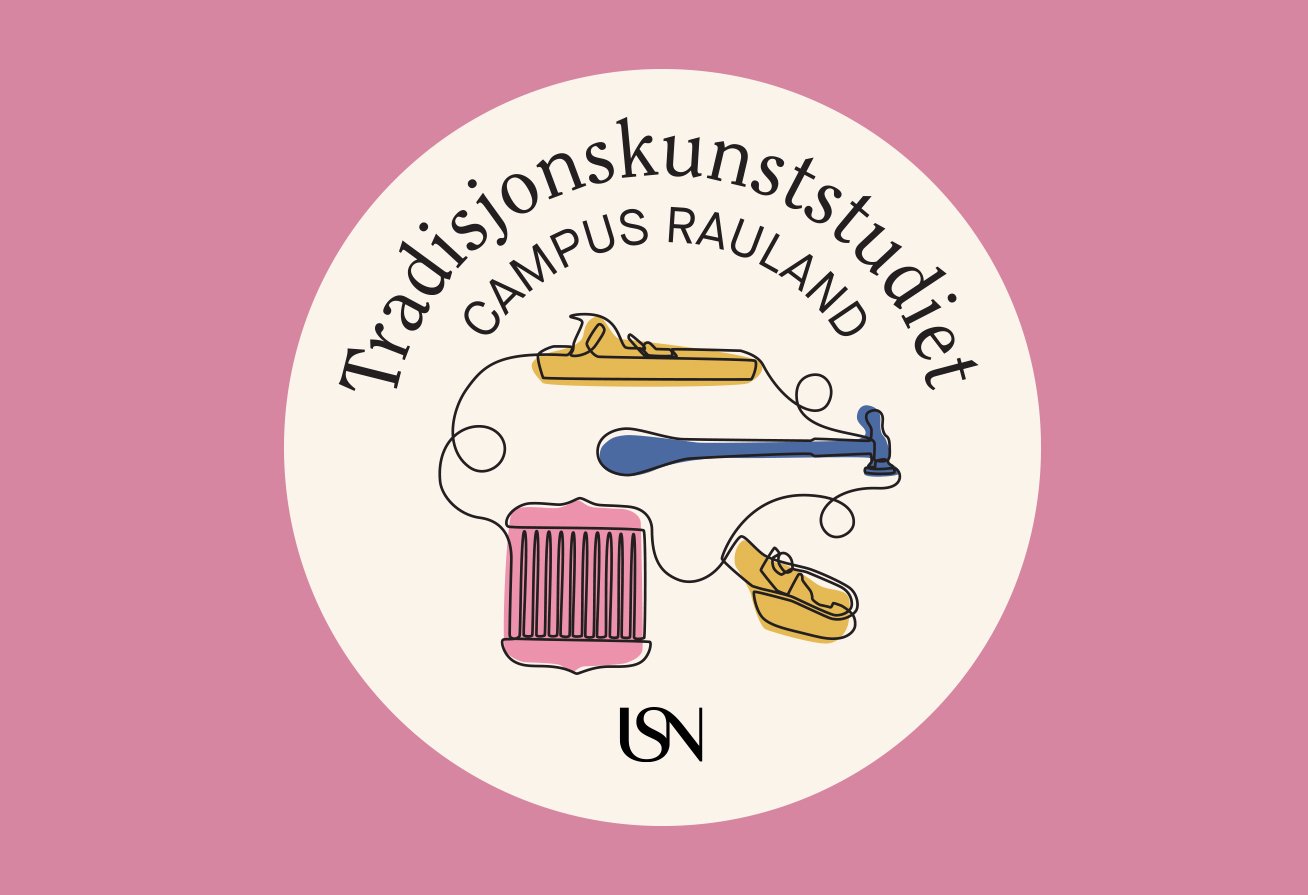
The four tools depicted in this illustration each represent a sub-discipline within the Bachelor of Traditional Art programme. The jack plane symbolises woodcraft, the hammer represents metalwork, the woven element refers to textile practice, and the miniature hand plane represents instrument making.
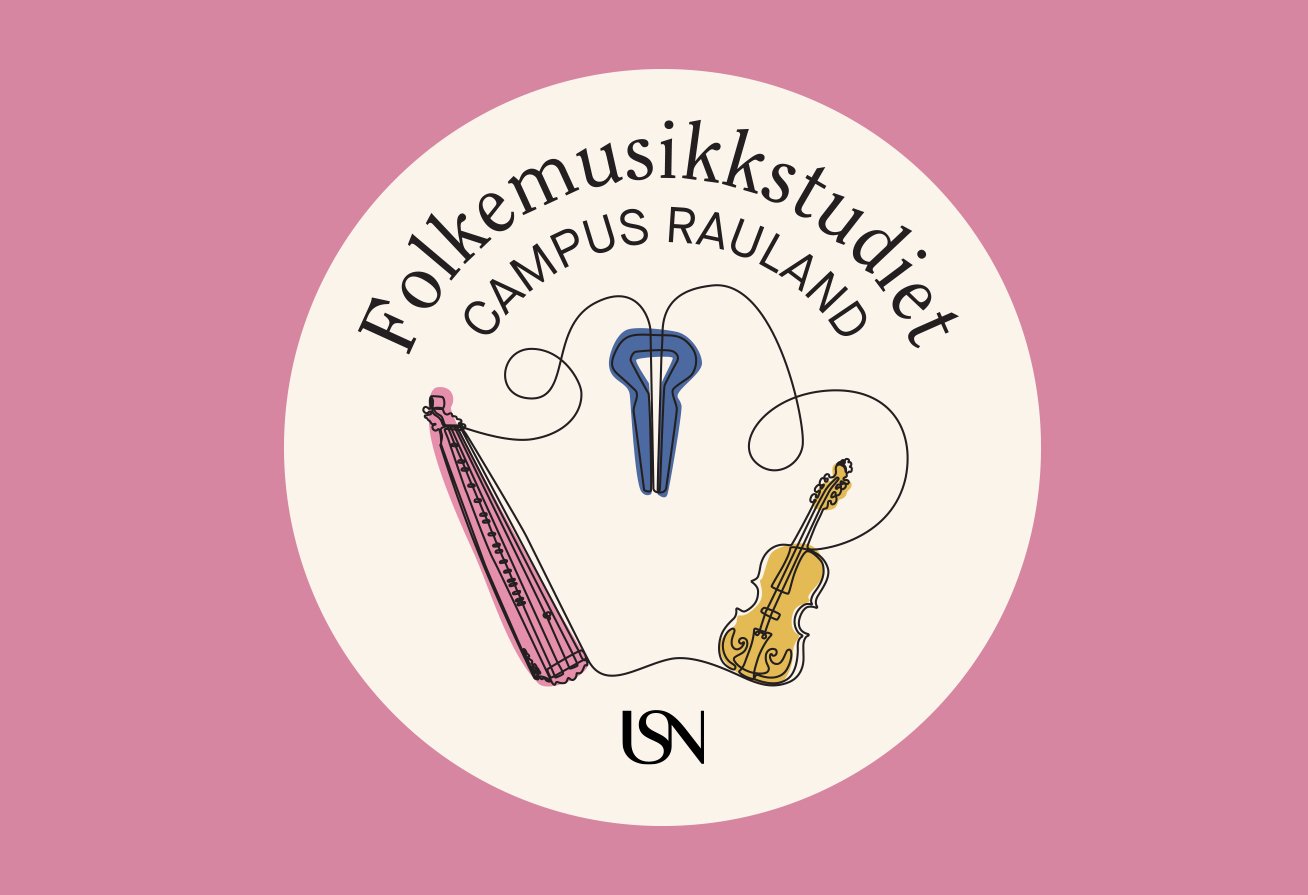
The instruments represented in this illustration were to be more traditional and unique, opposed to common folk-instruments like the guitar, flute and accordion.
The Norwegian dulcimer (Langeleik) is a string instrument with a long, narrow body, one melody string and several drone strings, played by plucking the melody string and stopping it against frets, while the drone strings provide a continuous resonance.
The Hardanger fiddle (Hardingfele) is a traditional Norwegian violin variant with four to five sympathetic strings beneath the fingerboard, characterised by decorative elements such as mother-of-pearl inlay and rosemaling, and often featuring a carved lion or dragon head.
The jaw harp is a small, traditional folk instrument made of metal, played by holding it against the teeth and plucking a flexible tongue. The sound is shaped by the player’s mouth and breath, creating rhythmic, resonant tones.